NEXUS · Engineering

Testing

Every sling is proof loaded before release, and every test leaves a record: the load, the length, the curve between them.

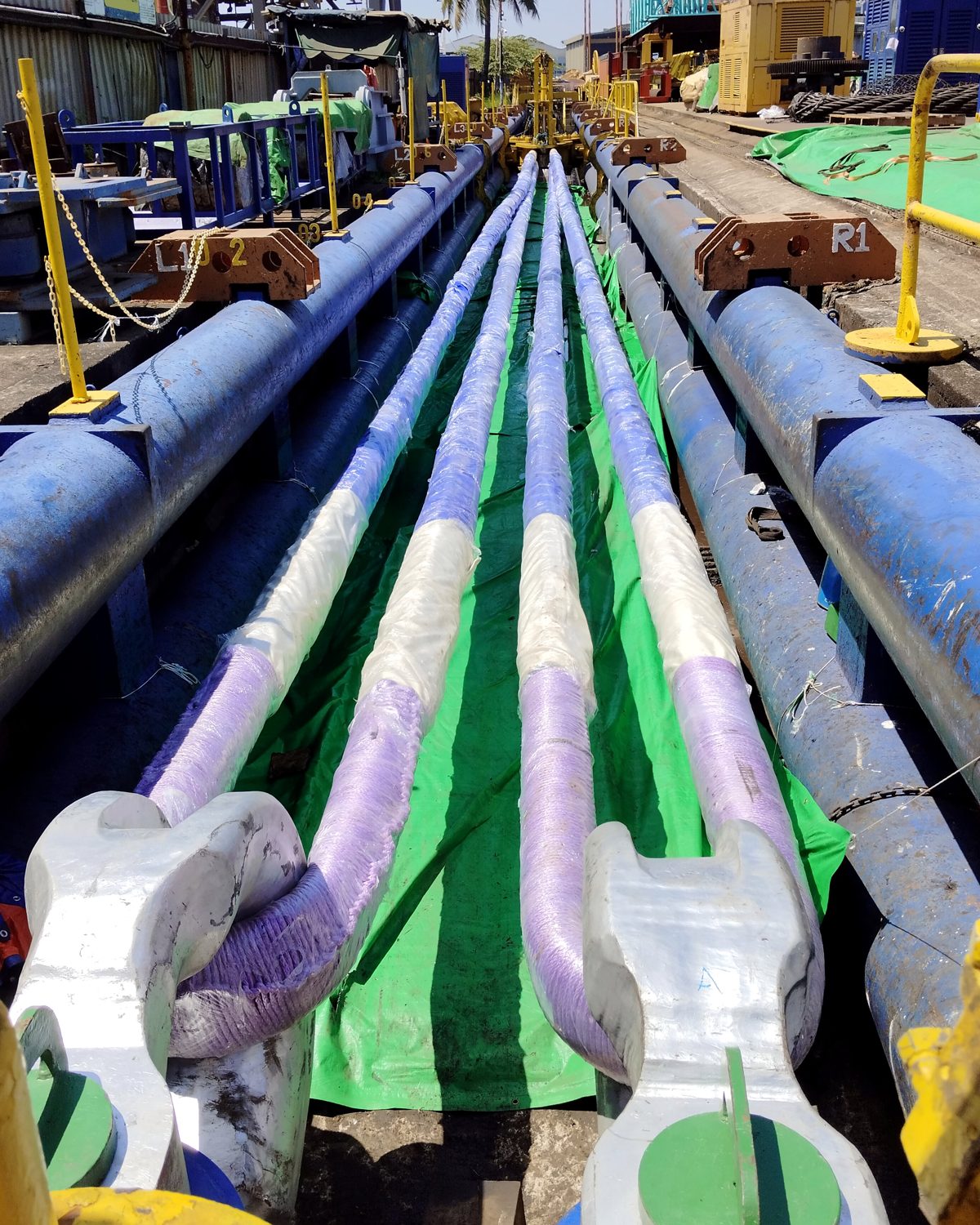
Two matched round slings on shackles laid out along a long horizontal test bed
A matched pair of 78 m NXRS 2870 slings in basket on the test bed at the NEXUS CORE, ready for proof load to 1,820 metric tons.

Test bed

Proven here, before it lifts there

A horizontal bed long enough to test the slings at their working length, in the hitch they will be used in — straight pull or basket over pins sized to the job.

2,000+
Metric tons in-house test bed capacity
100%
Of slings proof load tested before dispatch
IACS
Leading class societies witness on request

Length is logged in steps all the way up the load, so the certificate carries a curve, not a single number at the end of the test.

Sequence

From yarn to certificate

The same five steps for every sling, whatever its size.

  1. Yarn

    Each HMPE yarn batch is tensile tested before it goes into a core. The report numbers follow the sling to its certificate.

  2. Measure

    Length is measured at 3% MBL on test pins of known diameter, and checked against tolerance.

  3. Proof

    Proof loaded in the hitch it will be used in, to the standard the project calls for, with load and length logged all the way up.

  4. Inspect

    Every sling is fully inspected before release.

  5. Certify

    Working length is recalculated for the real hook and trunnion. Certificate, curve and yarn reports go into the data book, with witness by DNV, ABS, LR, BV or RINA upon request.

Cyclic, elongation and break testing where the project requires it.

The record

What the data book holds

One book per order, built as the slings are tested. It is the document the lifting contractor's engineers and the warranty surveyor will ask for.

← Design and certification

Need a sling proven before it ships?

Tell us the lift and the standard. We'll set the test to match.

Contact engineering